2019 Detroit Auto Show Hits, Misses, and Revelations

0

DETROIT, Michigan—Thirty years after Toyota launched Lexus and Nissan introduced Infiniti here, and 27 years after Chrysler smashed Cobo Hall’s front windows with the 1993 Jeep Grand Cherokee, the North American International Auto Show is done with January. The reviews from jaded auto journos are mixed, and the press-day crowds were down despite Toyota and China’s GAC flying in press from overseas. We’re pretty confident, though, in saying what Detroit lacked in quantity, it made up for in quality this year. There is more to like than there is to avoid, even if the Japanese and Chinese automakers are the only ones left who still build concepts, and even though Mercedes-Benz, BMW, Mini, Audi, and Volvo this year joined a bunch of other automakers who had followed Aston Martin’s decision to leave town after its Zen display of a decade ago. Herewith, our regular compendium of criticism, the good, the bad, and the philosophical, this time about what there is to see at the 2019 NAIAS:

HIT: Toyota Supra

Too many are getting stuck on the BMW partnership and the long gestation process, nitpicking the design, and decrying the lack of a manual transmission (which by the way Supra chief engineer Tetsuya Tada has not ruled out, so call your favorite dealer and demand it). Can we all just agree that what Toyota has done is give the world what by all accounts should be a nimble, kick-ass, rear-drive sports car that’s relatively attainable, price-wise? Call it whatever the hell you want, the fact that this car exists at all is pretty remarkable in this day and age. And it’s all but assured that hard-core variants will be in the offing. Yeah, what a terrible thing Toyota has done . . . not. —Mike Floyd

Automotive journalists can be a funny group. After wishing for a new Supra for years, some of them were overheard describing the final production car as less than thrilling, with others going so far as to call it “ugly.” “Look at all those fake plastic vents and intakes,” they decried. But as Supra designer Nobua Nakamura told editor-in-chief Mike Floyd, those nonfunctional pieces could become functional on future variants of the car. I don’t think the new Supra is perfect in the appearance department, and its roofline does look proportionally odd from some angles. But for the love of Suzuka, I’m excited to get a chance to drive it once test vehicles become available. If it lights up twisting roads as I expect it will, any niggling quibbles I have with its styling will go right off the nearest cliffside. —Mac Morrison

The biggest, most anticipated thing at this show is not an SUV, or even an autonomous tall electric sedan, but a sports car. Yes, it’s essentially a BMW Z4built in Austria by Magna, but at least it has its own sheetmetal, which is more than you can say for the 86. And I’d take that Toyota 86 over most of the cars on the market today. Since the beginning of time, sports cars have relied on sharing some components to make development costs work out. In his introduction of the car, Akio Toyoda said he hopes Toyota will build more new sports cars in the future. Here’s to seeing him fulfill that wish. —Todd Lassa

MISS: Toyota Supra

This was easily the most anticipated car of the show, and I have no doubt it will be a blast to drive. But what is with Toyota outsourcing its performance cars? Sure, it’s great that Toyota will be selling a re-skinned BMW. But right in the same room as the BMW Supra is the Lexus LC, a 2018 Automobile All-Star and proof positive that Toyota knows how to design scintillating cars. With all the emphasis on making Camrys and RAV4s better to drive—which they are, by the way—what does it say when you outsource your halo sports car? I can’t imagine the effect this must have had on the morale of their engineering corps. “Nice job on the new Camrys, and oh, by the way, that new Supra? We’re getting BMW to do it.” Don’t get me wrong, I’m happy to have the Supra back—but I’d prefer a ToyotaSupra. —Aaron Gold

REVELATION: The Supra almost wasn’t a Supra

In a chat at the Detroit show with Supra chief designer Nobua Nakamura, he told us that in July of 2013 that he and his team started sketching out ideas for a model that was at first billed as a nameless sports-car project. It was only after seeing the positive reception given to the FT-1 concept—created by Toyota’s Calty design house in California—at the 2014 Detroit show that the FT-1 would become the primary design inspiration for the sports-car project that would eventually be dubbed Supra. And the rest, as they say, is history. —MF

HIT: Akio Toyoda

For giving the best speech I’ve seen at an auto show in years, if not ever. No boring sales numbers. No bits of badly faked enthusiasm. Toyoda-san’s speech was funny, it was too the point, and though it was scripted—I was reading it on the teleprompter along with him—it’s obvious he’s seriously jazzed about this car (even if it is an automatic BMW). —AG

HIT: Fernando Alonso

My wife thinks so, anyway. Alonso appeared briefly on stage with Akio Toyoda for the Toyota Supra launch. Toyoda was gracious in acknowledging that the two-time Formula 1 champion (for Ferrari) and one-time 24 Hours of Le Mans winner (for Toyota) is driving another marque at the 24 Hours of Daytona later this month (a Cadillac). —TL

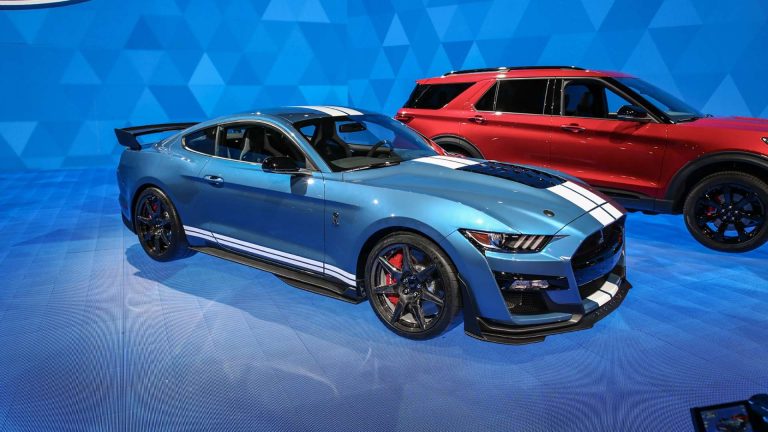
HIT: Ford Mustang Shelby GT500

For the jaded, it might be easy to look at the new GT500 and see just another jacked-up performance variant of Ford’s pony car. I get that . . . but whatever. More than 700 horsepower (what’s the final number, Ford?!) from the 5.2-liter supercharged V-8, a dual-clutch gearbox, zero to 60 mph in the mid-three-second range, a sub-11-second quarter-mile, magnetic dampers, and an optional Carbon-Fiber Track package with carbon wheels, rear-seat delete, and more? Find me a challenging road course and let’s get it on. Now. —MM

RELEVATION: Mahindra

This plucky Indian company is showing off its not-road-legal CJ-5 clone right in Jeep’s back yard. That takes cojones!—AG

HIT: Lexus LC Convertible concept

Rare is the car that gets scalped and doesn’t look great, but even rarer is a car as stunning to behold as the LC droptop. For all the coupe’s beauty—okay, some folks don’t like the spindle grille, but I think it works there—its overall attitude and stance strike me more as coming from a place of aggression. This concept elevates the LC to true elegance. I wouldn’t be shocked to see examples of the eventual production version at various concours d’élégance in the coming decades. —Erik Johnson

Yes, please. We love the LC hardtop, which was a 2018 All-Star, and with the top down, it takes the LC’s delightful GT style to another level. —MF

And here I thought it couldn’t get better than the LC coupe. Built it, Lexus! Build it, build it, build it!—AG

MISS: Cadillac XT6

It’s a damn shame what’s happened to Cadillac. Yes, I get it, its sedan sales are cratering and OMG it needs crossovers ASAP. I’m sure the XT6 and XT4 will be sales salve, but they come off as old GM badge-engineered exercises, and beyond the expressive grilles look uninspired. While they may put the brand back in the black, it’s sad to see really capable cars like the CT6 be minimized. At least Cadillac gave that car some serious attention in the form of the 550-hp CT6-V (which already is sold out). There is some hope in the form of the emerging EV strategy. Maybe those cars won’t have alphanumeric names. —MF

As another grizzled veteran told me, this three-row luxury SUV would have been a hit in 2012, or even 2016. While there’s nothing wrong with the new XT6 other than the Honda Pilot-esque side surfacing and the too-familiar GM interior plastics and switchgear, there’s nothing about it that pops. While I once believed that rear-wheel-drive proportions don’t matter on a tall SUV, the new Lincoln Aviator and even the 2020 Ford Explorer (gasp) have proved otherwise. —TL
The 2019 Hyundai Santa Fe Delivers on Its Promises

0

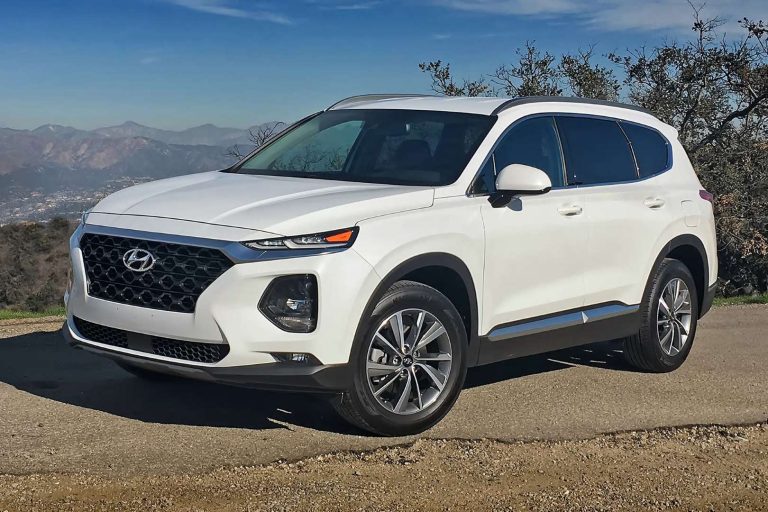
Here’s the scoop in a nutshell: The five-passenger Hyundai Santa Fe crossover is thoroughly redesigned for 2019. It’s no longer called Santa Fe Sport, either, a nomenclature change made just as the larger three-row Santa Fe XL based on the previous model prepares to give way to the all-new Palisade for 2020. Oh, and there’s this: The new Santa Fe is bigger and roomier than its predecessor in every meaningful dimension.

While a slew of trims is available, plus a choice of front-drive or all-wheel drive ($1,700 extra), the test car that showed up on my doorstep for a weeklong stint was a mid-level SEL Plus with FWD. This is a clean and handsome rig, with narrow LED daytime running lights atop LED headlights, both outboard of a chunky egg-crate grille with fog lamps positioned to each side. Lithe A-pillars improve forward visibility, while the front overhangs have been minimized. Handsome 18-inch wheels are standard with the SEL Plus.

A quick look at the window sticker’s $30,780 base price shows the word “INCLUDED” next to every item on board, save for a piddling $125 for carpeted floor mats. There’s a ton of standard stuff. Safety gear includes blind-spot detection, rear cross-traffic alert, lane-keeping assist, active cruise control with stop and go capability, and forward collision avoidance. The Santa Fe is also Hyundai’s first vehicle to include across-the-range standard Safe Exit, which warns occupants about opening side doors if a car is approaching from behind (the system can also automatically override the electronic child safety locks to prevent the driver from unlocking them if a car is approaching). Convenience goodies include an eight-way power driver’s seat (both front seats are heated), keyless entry and start, heated side mirrors, a 7.0-inch color touchscreen with Apple CarPlay and Android Auto, and a premium Infinity audio system with surround sound and Clari-Fi, the latter a function which seeks to wring the best audio quality from compressed digital files.

Climb aboard and the new Santa Fe immediately feels airier than its predecessor, particularly in the seats; front hip room has increased nearly an inch. The dash is an approachable mix of digital screens and analog controls, making it a no-brainer to dial-in your preferred radio station (SiriusXM is included) or configure the dual automatic climate control to your liking. The forward center console includes ports for 12-volt gear, USB, and an AUX input. The materials are tasteful and everything is nicely finished, but the overall look is more functional than luxurious. That said, the simplicity of the interface and the resulting lack of annoyances proved more welcome in day-to-day driving than a hedonistic Nappa-leather cockpit full of overly wrought tech.

The rear seats gain more than an inch of legroom and there’s enough space for three adults (on short trips at least). The rear seat slides fore and aft, reclines, and also folds flat. Nearly three inches of added overall length have increased cargo room behind the second row, too. At the rear, a hands-free smart power liftgate is standard.

While a 235-horse 2.0-liter turbo four is optional, my example was powered by the standard 185-hp 2.4-liter naturally aspirated four. It’s a generally agreeable powerplant, moving the Santa Fe through urban traffic easily and reasonably quiet on the highway—though it can get strident when pulling up a steep grade. Making the most of all 178 lb-ft of torque is a new eight-speed automatic that greatly improves power delivery compared with the outgoing six-speed. It goes about its work seamlessly and quietly. The powertrain earns an EPA combined rating of 25 mpg.

No one would mistake this tall crossover for an enthusiast’s machine, but in almost all but spirited driving maneuvers the Santa Fe excels. The ride is improved thanks to a revised suspension, and steering is quicker and quite good. I drove the rig on errands, school-bus pickups, trips to the garden center and the grocery store, and an enjoyable Saturday jaunt to Santa Barbara for lunch and a museum visit—that trip being just under 200 miles up and back for the afternoon. In every situation, the new Santa Fe felt polished and composed, with an abiding feeling of structural solidity and the versatility to switch mission profiles in a blink.
No, the Hyundai cannot match the premium labels in richness of feel or finish. But at just under $31K with every feature above included, the new Santa Fe delivers a boatload of highly desirable amenities and safety tech, plenty of room for passengers and cargo, and a driving experienced that’s impressively refined and thoroughly competent. Besides, if you need more luxe, there are two even more impressively outfitted trims available—Limited and Ultimate—each with all-wheel drive and the turbo four optional.

Hyundai was right to drop the “Sport” moniker from its 2019 crossover. It’s everything else that the new Santa Fe does well.

2019 Hyundai Santa – Specifications

ON SALE Now
PRICE $30,780/$30,905 (base/as-tested)
ENGINE 2.4L DOHC 16-valve inline 4, 185 hp @ 6,000 rpm, 178 lb-ft @ 4,000 rpm
TRANSMISSION 8-speed automatic
LAYOUT 4-door, 5-passenger, front-engine, FWD hatchback
EPA MILEAGE 22/29 mpg (city/highway)
L x W x H 187.8 x 74.4 x 66.1 in
WHEELBASE 108.9 in
WEIGHT 3,800 lb (est)
0-60 MPH 8.5 sec (est)
TOP SPEED 125 mph (est)

Genesis Head Designer: Our SUVs Have No Design Benchmark

0

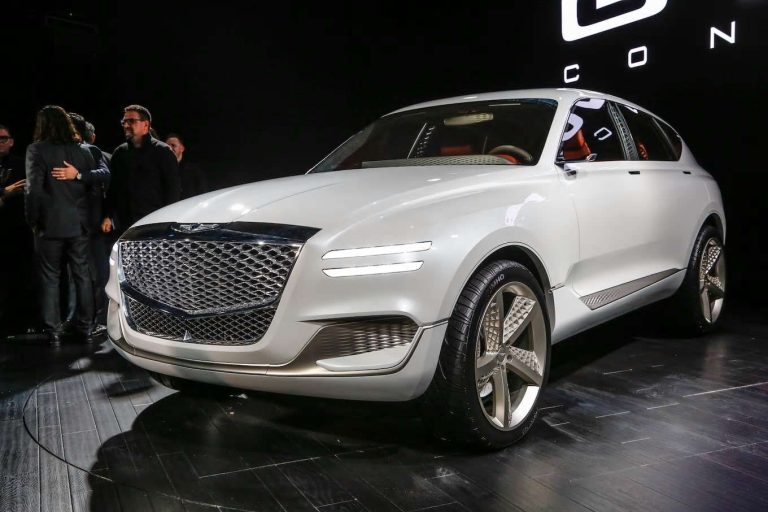
The Genesis brand has been on a roll lately. After debuting three sedans in three years—including the G70, the 2019 MotorTrend Car of the Year—Genesis is now looking to expand its lineup with SUVs. The GV80 Concept, which debuted at the 2017 New York auto show, was the first SUV ever to be seen from Genesis, and the production version could be ready next year. We talked to Luc Donckerwolke, the newly appointed chief design officer of Hyundai Motor Group, at the L.A. auto show about the upcoming SUVs from the luxury brand.

The GV80, which should compete against the BMW X5 and Mercedes-Benz GLE, is expected to arrive as a 2021 model, and its design is finished. Donckerwolke added that we should expect its styling to stay close to the concept from New York, which featured a futuristic look with clean and crisp lines.

“Just to give you an idea, the same design team that designed the GV80 concept [also] designed the production model,” Donckerwolke said. “So what you’ve seen it’s basically the design. Again, it’s more mature, it has more quality and more functionality applied to it, but it’s basically designed.”

Donckerwolke also said that we should expect a different design flavor in Genesis’ two upcoming SUVs. The GV70 could compete against the Volvo XC60, BMW X3, and Mercedes-Benz GLC, and like the G70 sedan, it could bring more sportiness to the lineup.

“And the two SUVs will also have—like the G90, G80, G70—their own personality, and so the GV80 is the bigger one. There will be another one, which will be more sporty, more emotional, but we will play the same strategy. Each car will have its own identity,” he said. The designer also alluded that there’s another SUV coming, and we’ve heard rumors about a compact crossover joining Genesis’ lineup.

Given that Genesis is a new brand, Donckerwolke and his team enjoy the freedom they have with their designs, but his main goal is to differentiate the styles from the competition. When asked if he had a benchmark, he said: “I mean, I’m trying not to because if we have a target, if we have somebody we’re looking at, we are limiting ourselves. I would like to have something quite unique and not targeting a company itself. Obviously, the whole architecture—like Mercedes and BMW, a rear-wheel-drive architecture—but we’re not really looking at them, and especially not in terms of design. I don’t want to look at them because we have a situation that nobody has. We are a new brand; so to target one competitor is actually limiting ourselves. It’s taking the freedom I have at the moment to create something unique, and obviously it’s difficult to make something unique when everything has been done already.”

With that freedom, Donckerwolke and his team are making sure their SUVs stand out in the crowded segment, adding functionality with other touches. He said: “An SUV is giving you a typology of vehicle that is addressing all the needs we have in terms of leisure functionality and professional functionality, but with a different flavor. When you do a sedan and you want to give a flavor, you give it sportiness—hinting at the race car. When you do an SUV, you give it the flavor—what I call the Marlboro man flavor. It’s the cowboy. It’s the adventurer that everyone wants to be. This is what we’re giving to SUVs. This is why I believe that we have to give more emotionality to these SUVs.”

We’ll have to wait until next year to get a taste of Genesis’ SUV flavor.

Here are the top car stories at CES 2019

0

Though many come for the insane TV tech, smart appliances and cute robots, CES 2019 is also the first major car show of the year. 

Transportation and mobility steals a little bit more of the show every year with more vehicle debuts, more crazy concepts and more tech finding its way into the cars. To bring you up to speed, here’s a quick roundup of the best automotive news we’ve seen here in Las Vegas. 

New vehicle debuts

CES saw the debut of the long-awaited, long-range version of Nissan’s Leaf EV. The 2019 Leaf E+ tweaks the world’s best-selling electric car formula with a larger battery pack that bumps its range to about 226 miles, a significant boost over the current model.

Meanwhile, Mercedes-Benz debuted its coupe-y, swoopy 2020 CLA-Class in Las Vegas this week. The compact sedan is packed with style, but bursting at the seams with tech, including Benz’s MBUX connected infotainment system and a healthy dose of driver aid technologies. (A bit of a power bump over the A-Class doesn’t hurt, either.)

Electric car startup Byton only debuted part of the production version of its M-Byte electric SUV, but it’s arguably the most exciting and contentious part. The M-Byte production cockpit features a massive 48-inch screen — that’s as large as seven iPads — and a touchscreen in the center of the steering wheel. We expect to see the rest of the car later this year.

The concepts of tomorrow

Forward-looking CES had no shortage of interesting concept cars, a few of which we’ve already seen before. Mercedes-Benz’s Vision Urbanetic concept made its North American debut on the Las Vegas Strip. Roadshow was there to take it for a spin — or rather, be taken for a spin in this autonomous car.

Uber talked quite a bit about its plans for flying taxis at its Elevate conference series in 2018. CES 2019 gave many their first in-person look at what to expect from that with the Bell Nexus flying taxi concept. It looks a bit like a big ol’ drone with seating for four passengers and a pilot and it could be taking to the air for test flights in early 2020.

I’ve saved the “Where we’re going, we don’t need roads” reference for perhaps the weirdest concept at the show. Hyundai’s Elevate concept is an electric emergency response vehicle with legs between its body and wheels. Able to transition between driving and walking modes, it’s a crazy future ambulance that can scramble over rocky terrain like some kind of lizard car. 

Reimagining the cockpit

Ten years ago, CES’ automotive hall was all about speakers and stereos, but 2019 sees automakers and media providers completely reimagining what entertainment in car looks like.

Audi collaborated with Disney on a project called Holoride, a VR experience for passengers that brings games and movies along for the ride. Meanwhile, Intel and WB’s AR cockpit is an augmented reality autonomous car experience that takes riders on a virtual tour of Batman’s Gotham City.

Speaking of augmented reality, suppliers like WayRay and Valeo are busy working on ways to bring AR tech to the cars of today. Valeo’s XtraVue invisible towing system uses cameras to make a towed trailer appear transparent when viewed through an in-car display. Meanwhile, WayRay’s massive head-up display tech enables AR data to be overlaid on to a vehicle’s windshield.

A different side of autonomous tech

The lion’s share of CES 2019’s car-related news fell to autonomous and semiautonomous technologies that aim to make tomorrow’s vehicles safer. The flashiest was BMW’s self-riding motorbike, which was able to steer itself around the convention center’s lot without falling over.

We also saw how autonomy will affect the trucking and logistics industries. Freightlinershowed off a Level 2 semiautonomous trailer cab that brings many of the modern advanced driver aid features from passenger cars to semi trucks.

At a smaller scale, startup Udelv debuted its second-generation autonomous delivery truck. The Udelv Newton has a longer range and is more flexible than the Udelv’s previous truck and will be hitting the road this year as part of pilot delivery programs with Walmart in Arizona and XL Parts in Texas.

And that’s just scratching the surface. There’s so much more to discover in our coverage of CES 2019 and more to come as we wrap up our coverage of the big show and roll straight into the Detroit Auto Show next week. 

CES 2019: See all of CNET’s coverage of the year’s biggest tech show.

TVs of CES: Huge 8K screens and insane roll-up OLEDs.

Valeo Unveils Back-Up Camera That Makes Your Trailer Invisible

0

According to many, poor visibility is one of the main disadvantages of modern cars compared to older, more traditionally-designed vehicles. A few companies have already presented different tech solutions to improve the overall visibility, including a transparent A-pillar and even a transparent hood which is now an option on the all-new Land Rover Range Rover Evoque. The Paris-based automotive supplier Valeo is taking things a step further by introducing a technology that lets you see through your trailer or caravan.

What’s hot and trending at the 2019 CES? Check out here

Debuting at the 2019 Consumer Electronics Show, the so-called XtraVue Trailer system uses several cameras mounted at the back of the vehicle and the rear of the trailer or caravan. The image from all sources is combined into a single homogenous image which shows what’s happening behind the vehicle on an additional small display somewhere on the center console. The overall idea is brilliant but we wish the device could be integrated into the factory infotainment system and use its display. That’s probably in the works.

According to Valeo, maneuvers should be “easier than ever, whatever the size of the trailer or caravan being pulled” with drivers easily changing “lanes, reverse and park, all with full control over their environment.”

Also in Las Vegas at this year’s CES, Valeo is showcasing a range of 48-volt electrical systems that help reduce fuel consumption in vehicles and is also unveiling “the full scope of its expertise in autonomy and connectivity.” Speaking of self-driving technologies, the company will display its Drive4U Remote and Voyage XR systems, as well as the Drive4U which is an autonomous vehicle that will be cruising the streets of Las Vegas fitted solely with series-produced sensors.

More tech innovations from 2019 CES:

Byton M-Byte’s Infotainment Screen Is 7 iPads Wide, Nissan Showcases Tech That ‘Sees’ Around Corners

Another interesting system Valeo is bringing to CES is the PictureBeam Monolithic which has been developed in cooperation with CREE and is basically a new generation lighting system that projects information and images onto the road.